Uwe Sieber’s Remove Drive Overview
If you’ve ever struggled to remove detachable drives from your PC safely, this is a useful alternative to consider. Its ability to employ wildcards rather than typical drive letters distinguishes it from the standard drive ejection technique. This feature provides a more adaptable and user-friendly experience.
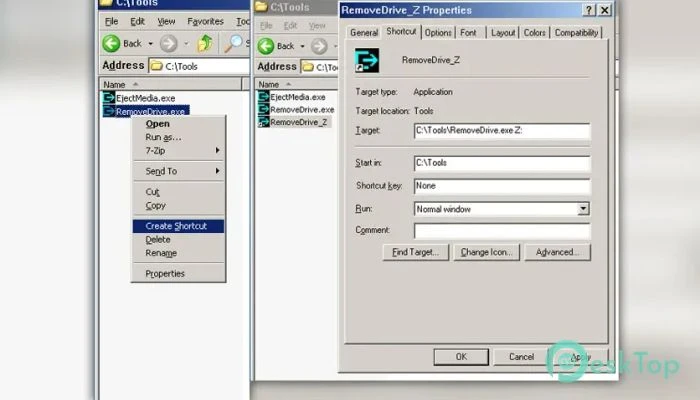
Features of Uwe Sieber Remove Drive:
Installing and getting started
The installation procedure for the utility is simple. Decompress the archive and move it to your favorite spot on your computer. The software includes an executable file, but its primary purpose is to convey information about the application’s capabilities. If you prefer a more hands-on approach, you can use the utility via the command-line interface, though this may be intimidating for some users.
Flexible Drive Ejection
One of the tool’s primary advantages is its independence from the drive letters that Windows typically assigns. To get the same results, specify the device’s unique ID string in your command. Furthermore, you can use wildcards, such as “Flash,” to eject the first drive whose name contains that term, increasing the efficiency of the ejection operation.
Troubleshooting Removal Failures.
One of the most aggravating aspects of attempting to eject drives is the risk of failure. This program has capabilities that assist you in determiningin determining the causes of these removal failures, saving you time and reducing the risk of data loss.
If you get an error when trying to eject a drive, it could be because the running EXE file generates a temporary file with the identical parameters. To address this, use the “-h” or “-a” arguments, which provide information about any open handles on the disks and the programs that prevent them from being closed.
System Requirements and Technical Details
OS: Windows 11/10/8.1/8/7
Processor: Multicore Intel Series or above; Xeon or AMD equivalent.
RAM: 2GB (4GB or more is recommended.)
Free hard disk space: 100MB or more is recommended.