RazorSQL is a high-quality database management and administration program. It supports SQL queries and provides a comprehensive set of database tools, ranging from simple viewing to editing. The second graphic clearly displays the databases that this software supports. Select the relevant database, then enter the connection information (login and password, host, etc.), connect, and you’re ready to browse.
It’s quite convenient; I use similar software on occasion, but rarely. I couldn’t discover Russian help, which is a major drawback because the number of functions can be overwhelming for a novice user. On the other hand, a casual user will not connect to the database, and an average individual like myself can figure out the fundamentals.
Once you’ve got access to the database, you can completely administer it, including searching, editing, monitoring, and query execution—basically, everything you’re used to, all in a simple interface. As for the workaround, the generator (which is currently in the archive) is written in Java, so you must have the Java SDK installed on your PC to execute it correctly. This is not a problem, as most individuals already have it. My goal is to warn you to avoid future misunderstandings.
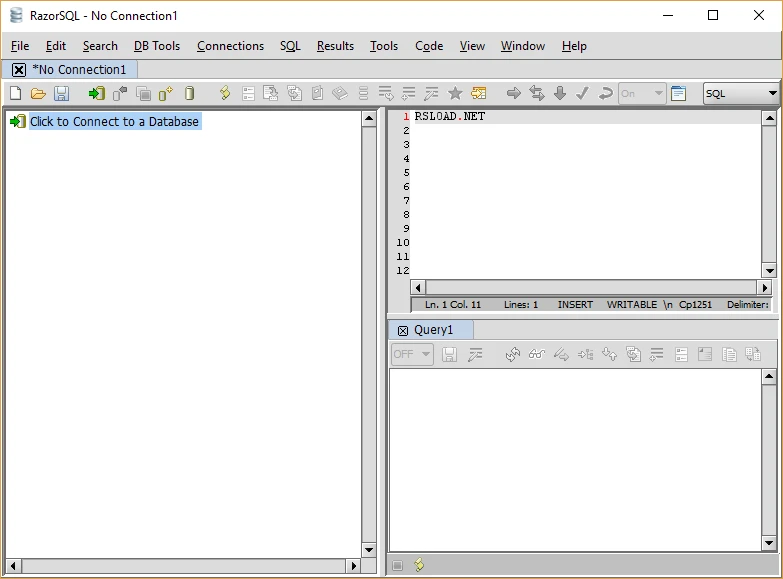
RazorSQL is difficult to beat in situations with numerous DBMS systems and users across multiple platforms. Many users use this program with MSSQL Server, Oracle, Greenplum, PostgreSQL, MySQL, and MongoDB. It connects, operates, and provides complete syntax highlighting in all of these contexts without trouble. The option to preserve the SQL IDE when migrating from Windows to Linux Mint is an excellent feature.
A direct competitor is DBeaver, a powerful and popular alternative that supports practically all databases and includes a visual query designer. There is a robust professional tool called DataGrip that includes smart code completion, query analysis, and extensive integration with version control systems.