
Power BI Report Server is a Microsoft server solution. It enables you to develop, publish, and distribute interactive reports throughout your organization. Assume you have a corporation that needs a robust reporting system but also requires all data to be stored on its own servers, hence excluding cloud infrastructure. It is built on the well-established SQL Server Reporting Services platform and can support thousands of users.
You can get Power BI Report Server for free using a key file or a crack; the full version is available here.
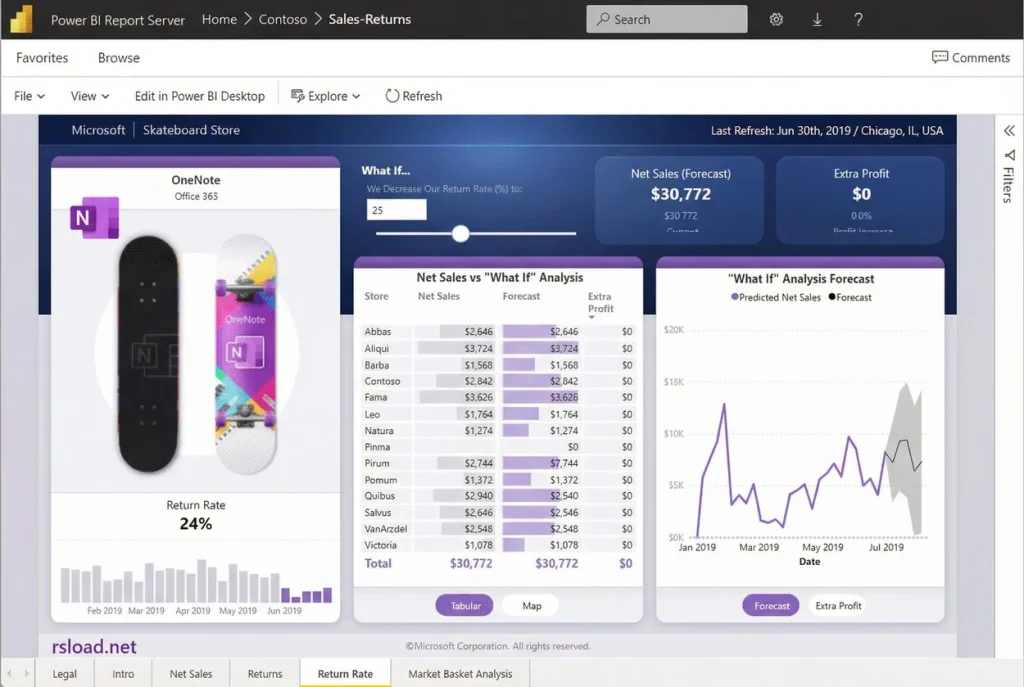
Let us look at the stages required.
- First, you build reports in Power BI Desktop, a free application from Microsoft that includes a visual editor and allows you to drag and drop things.
- Take data from any source and create dynamic and visually appealing graphs, charts, tables, and dashboards.
- The final step is to complete the reports and publish them to your servers. Then you can arrange things into folders, set access privileges, and so on.
- Users can then access the reports via a browser or mobile app on any device.
On-premises hosting is the foremost priority. The entire infrastructure is put behind a corporate firewall, ensuring data protection and giving you control over security and access management. This is a critical necessity for banks, government agencies, and medical institutions.
The tool is compatible with cloud-based Power BI, so if a company wishes to migrate to the cloud or adopt a hybrid model in the future, the process will be seamless, eliminating the need to redesign reports from scratch.
You may work with two types of reports: interactive reports, which include graphics that let you click, filter, and analyze data in real time. Invoices, delivery notes, and financial statements are all examples of paginated, pixel-perfect reports—traditional tabular reports that look great when printed.